Carved, Built, Salvaged: The Making of a Minahasan Cottage
Drive through Woloan and you may notice the finished houses along the road can be confusing at first. Roofs are on, doors are hung, and the steps already meet the ground. They look settled. In fact, many are display houses waiting for a buyer who may have them taken apart and moved somewhere else.
That changes the way you notice the building. Instead of treating the cottage as something tied to one spot, you start noticing the frame, the joints, and the order in which the pieces must have gone together. In Woloan, construction is meant to survive the trip.
Joined So It Can Travel
Look closely at the frame and nails are not doing all the work. Traditional wood joints connect the main pieces, allowing one part to lock into another. The house is built as a complete structure first, but the method leaves open the possibility of taking it down again without turning the move into demolition.
Once an order is ready to leave Woloan, the structure can be disassembled into the parts it was built from. Those pieces travel by truck or ship, then go back together at the new site. A builder may travel with the house for reassembly because the same people who cut the joints already know the sequence.
Seeing a finished house as something movable changes the roadside display completely. The cottage you walk around today may be standing somewhere entirely different later, but the craft holding it together travels with it.
Wood Chosen by the Job
Ironwood takes the parts that need strength, especially posts and structural pieces. It is dense, durable timber, and in a raised Minahasan house, those posts carry much of the building above damp ground.
Cempaka has a different place in the house. It is used for walls and other visible timber work, where the surface remains part of the finished room. Grain, joints, and tool marks stay close to view.
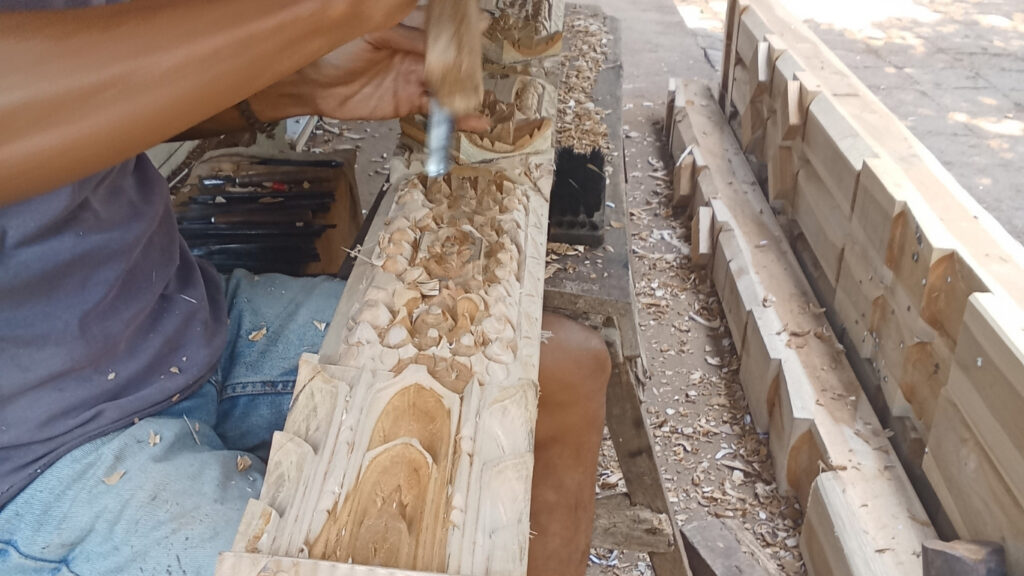
Nothing in the workshop has to become waste because it is too small for the frame. Salvaged timber and offcuts can return as furniture, carved panels, or smaller details. That reuse suits a building tradition where the material is handled closely from the first cut to the final fitting.
Family Workshops Along the Road
Behind those display houses are workshops that are often family businesses. The trade passes through people working beside one another rather than through a separate factory line. A builder learns by handling the same hardwoods, cutting the same kinds of joints, and seeing what happens when a frame goes up, comes down, and is assembled again.
Some buyers choose a house already standing by the road. Others start there and ask for changes. Size, room arrangement, or decorative work can be adjusted before delivery, so the cottage is not necessarily a fixed model just because the first version was built in advance.
Delivery is part of the making rather than something tacked on at the end. The people who understand the frame may also be the ones who travel with it. The job is not finished until the same pieces stand together again at the new site.
Craft You Can Still See
Because so much timber remains visible, the method does not disappear after construction. Posts show where the weight is carried. Joints mark the places where one piece meets another. Carving may appear in a panel or piece of furniture, but it sits beside the structural work instead of covering it.
Older wood adds another layer. A salvaged board may carry marks from an earlier use before becoming a table, a carved detail, or part of the interior. New work and reused material can sit in the same cottage without pretending they came from the same moment.
Here, craft and construction are hard to separate. The house works because the frame has been cut correctly, yet those same decisions shape what you see inside. The cottage is a building, but it is also plainly something people made by hand.
What Woloan Adds to the Cottage Story
Back in Arizona, a casita goes together by a different system and answers a different climate. Woloan leaves us paying closer attention to framing, materials, and the people doing the work long before finishes make the building look complete.
Across our site, Woloan gives us a clear example of a small building whose character comes from the way it is assembled. When the site turns toward Arizona, the materials change, but the question stays useful: how was this small building made, and does the method suit the place where it will stand?